Friday, 15 August 2008

உலகிலேயே ஆழமான ராஜஸ்தான் மாநிலத்திலுள்ள கிணறு !! ஒரு தவகல் ..


3500 படிக்கட்டுகள் கொண்ட உலகிலேயே ஆழமான கிணறு ராஜஸ்தான் மாநிலத்திலுள்ள அபனேரியில் இருக்கிறது. 1200 ஆண்டுகள் பழமையானது.    இந்தியாவிலுள்ள அதிசியங்கள் என்ன என்று கேட்டால் அஜந்தா, எல்லோரா, அமர்நாத் குகை, தாஜ் மஹால், மீனாட்சி கோவில், பனிமூடிய இமய மலை என்று அடுக்கிக் கொண்டே போவார்கள்- கட்டாயம் நூற்றுக்கும் மேலே வரும். ஆனால் நம் நாட்டிலுள்ள உலகிலேயே ஆழமான கிணறு அந்தப் பட்டியலில் வருமா என்பது சந்தேகமே. ஏனெனில் கின்னஸ் சாதனை நூல் போன்றவற்றைப் பார்ப்பவர்களுக்குத் தான் இத்தகைய விஷயங்கள் கண்ணில் அகப்படும். படிக்கட்டுகளை உடைய கிணறுகளில் மிகவும் ஆழமானது (Deepest Step well in the World) என்ற வகையில் இது சாதனை நூலில் இடம்பெறும்.
இந்த அதிசியக் கிணறு இந்தியாவின் ராஜஸ்தான் மாநிலத்தில் இருக்கிறது. இந்தக் கிணறு ஆழமானது மட்டும் அல்ல, மிக அழகானதும் கூட. ராஜஸ்தானில் ஜெய்ப்பூர் நகரிலிருந்து சிறிது தொலைவில் அபநேரி (Abhaneri) என்ற கிராமத்தில் இந்தக் கிணறு உள்ளது. 13 அடுக்குகளாக 3500 படிகலைக் கொண்டது இது. ஆழம் சுமார் நூறு அடி. கிணற்றின் பக்கங்கள் சுமார் 110 அடி (35 மீட்டர்) நீளம் உடைய சதுரமான கிணறு.


இது ஆயிரம் ஆண்டுகளுக்கும் மேலான வரலாறு உடையது. கி.பி 850ல் மன்னர் ராஜா சந்த் என்பவர் இதைக் கட்டினார். இந்த அபநேரியின் உண்மையான பெயர் அப நகரி (ஒளிமயமான நகரம்). ராஜா சந்த் கட்டியதால் கிணற்றின் பெயர் சந்த் பவ்ரி (பவ்ரி, பவ்டி என்ற சொற்கள் கிணற்றை குறிக்கும்).இங்குள்ள பாமர மக்கள் இந்த கிணற்றை ஒரே இரவில் பூதங்கள் கட்டியதாக நம்புகின்றனர். ஏனென்று கேட்டால் இவ்வளவு ஆழமான கிணற்றை மனிதர்கள் கட்ட முடியாதென்று பதில் கூறுகின்றனர். உண்மையில் இதைப் பற்றிப் படிப்பதை விட பார்ப்பதே மேல்—காதால் கேட்பதைவிட கண்ணால் காண்பதே இதன் பெருமையைப் புலப்படுத்தும்.

இந்தக் கிணறு ஹர்சத் மாதா (Harshat Mata temple) கோவிலுக்கு முன்னால் இருப்பதால் இதில் மத நம்பிக்கைகளும் கலந்திருக்கலாம். ஆனால் முஸ்லீம் படை எடுப்புகளின் போது பல சின்னங்களும் அழிக்கப்பட்டுவிட்டதால் முழு விவரமும் இப்போது கிடைக்கவில்லை. ஹர்சத் மாதா என்பதன் பொருள் “மகிழ்ச்சி தரும் அன்னை”. கோவிலை மட்டும் அல்ல, இந்தக் கிணற்றைப் பார்க்கும்போதும் இந்தியர்களின் கட்டிடக் கலைத்திறனையும் கணிதப் புலமையையும் எண்ணி எண்ணி மகிழ்ச்சி அடைவோம் என்பதில் ஐயமில்லை.
ராஜஸ்தான் மாநிலம் தண்ணீர் பற்றாக்குறை நிறந்த மாநிலம். பெரும்பாலும் பாலைவனப்பகுதி. ஆகையால மழை நீரைச் சேமிப்பதற்கு இப்படி கிணறுகள் வெட்டுவது வழக்கம் என்றும் தெரிகிறது. ஜோத்பூர் அருகில் கடன் வாவ் என்னும் இடத்தில் மற்றொரு கிணறுஉள்ளது. ஆனாலும் அபநேரி கிணற்றின் அழகுக்கு ஈடு இணை இல்லை.அபநேரியின் ஆழமான கிணற்றுக்கு மேலே மொகலாயர்கள் சில மண்டபங்கள், கட்டிடங்களைக் கட்டியிருக்கிறார்கள். மோர்னா லிவிங்ஸ்டன் என்பவர் ராஜஸ்தான் மாநிலப் படிக் கிணறுகள் பற்றி ஆய்வு செய்து புத்தகம் எழுதியுள்ளார்,,,ராஜா!!!
தொகுப்பு : அ.தையுபா அஜ்மல்.

Thursday, 14 August 2008

Health Benefits of Breastfeeding for Babies..

  1. We all know that there is a countless number of benefits that comes from making the decision to exclusively
     breastfeed your child.  But I just wanted to highlight a four main benefits that should be encouragement enough to make this decision.
  2. Breast milk contains antibodies that help your baby fight off viruses and bacteria. Breastfeeding lowers your baby's risk of having asthma or allergies. Plus, babies who are breastfed exclusively for the first 6 months, without any formula, have fewer ear infections, respiratory illnesses, and bouts of diarrhea.


  3. 1. Benefits of Breastfeeding

  4. 2. Breastfeeding When it comes to good positions to use while breastfeeding, your comfort as well as the ease with which your baby will be able to feed is the first and foremost concern. Finding a position that you are most comfortable and happy with will make it easier for your baby to latch on to your breasts and feed with ease. Here are some of the best breastfeeding positions that you might use when you are breastfeeding.

  5. 3. Introduction• Breastfeeding is the optimal source of nutrition. The Human Milk is specie specific and it provides all the essential nutrients necessary for the growth and development of the newborn infant.• The AAP, AAFP and WHO recommend exclusive breastfeeding for the first six months of life , and continuous breastfeeding for at least 12 months of life.• The Target of USDHHS “Healthy People 2010” initiative is to achieve breastfeeding at birth of 75%, 50% at 6 month and 25% at 12 months of life.• 2008 data published by the CDC shows that 77% of initiate breastfeeding at birth. Only about 30% of womenCONTINUE with breastfeeding of the infant to 6months of age.

  6. 4. “Breast fed infants, are Healthy Infants.”

  7. 5. Anatomy and Physiology of Lactation Structure of the Human Breast

  8. 6. Structure of the Human Breast• The Human breast are modified sweat glands responsible for lactation (milk production).• The breast contains adipose tissue and fibrous connective tissue.• Different hormones are responsible for the development of the breast and changes that occur during pregnancy.• The major hormones affecting breast development and enlargement are estrogen, progesterone and prolactin.• Each breast contains about 20 lobes, each lobes contains several lobules which at the end have alveolar in which milk is produced.• Milk production and secretion are responsive to two major hormones – prolactin and oxytocin; and the sucking reflex.• After production of milk in the alveolus, the milk moves through the ducts and are stored in the lactiferous sinus. When the
  9. 7. Suckling Hormonal Reflex Arc

  10. 8. Suckling Hormonal Reflex Arc (Cont’d)• The sucking reflex arc is a hormonal positive feedback mechanism.• The sucking of the breast by the infant stimulates the nipple; this sends messages to the spinal cord and subsequently to the brain.• Prolactin is released from the anterior pituitary for milk production and oxytocin from the posterior pituitary for the milk let down.• Prolactin receptors are established within the first eight days of delivery.• Suckling at breast increases prolactin levels, so at each feeding, levels rise, hence more milk production.
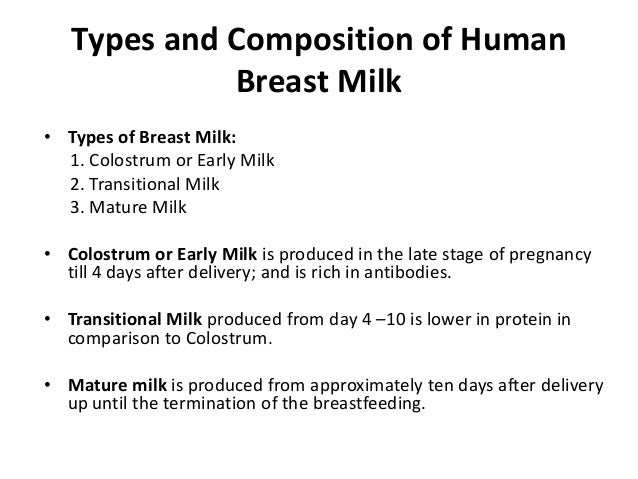
  11. 9. Types and Composition of Human Breast Milk• Types of Breast Milk: 1. Colostrum or Early Milk 2. Transitional Milk 3. Mature Milk• Colostrum or Early Milk is produced in the late stage of pregnancy till 4 days after delivery; and is rich in antibodies.• Transitional Milk produced from day 4 –10 is lower in protein in comparison to Colostrum.• Mature milk is produced from approximately ten days after delivery up until the termination of the breastfeeding.

  12. 10. Types and Composition of Human Breast Milk (Cont’d)• Fat -The main lipids found in human milk are the triglycerides phospholipids and essential fatty acids.• Protein –Whey ; lactoferrin, lysozymes, immunoglobulin , A- lactalbumin, Casein; lower concentration in human milk.• Carbohydrate –Include lactose and oligosaccharides.• Leukocytes -Include neutrophils, marcrophages , lymphocytes.Non protein nitrogen –urea, uric acid.• Other constituents: steroid hormones, peptides, insulins, growth factors, minerals, vitamins, lipase.

  13. 11. Storage of Breast Milk• Human milk can be stored at room temperature for 6-8 hours.• Expressed milk can be stored in an insulated cooler bag with icepacks for 24hours.• Breast milk can be stored in the refrigerator for about 5 days at about 40°F.• It can also be kept in a freezer compartment of a fridge for up to two weeks at 0 -5°F• It can be stored in a deep freezer for about 3-12 months .• Breast milk should be stored in BPA (Bisphenol A)FREcon
  14. tainers.

  15. 12A
  16. chieving Optimal Breastfeeding• Activities, attitudes and procedures during the delivery and post partum period have an impact on breastfeeding .• There is well documented evidence that skin to skin contact between infant and mother helps to maintain the body temperatures, reduce risk of hypoglycemia, enhance oxytocin release and beneficial nutrition with intake of colostrum .• Skin to skin contact should occur for about 1-2 hours after delivery. Procedures after delivery like weighing, administration of vitamin K, eye prophylaxis and other procedures should be delayed.
  17. 13. Achieving Optimal Breastfeeding (Cont’d)• Breastfeeding should be started and fully established before discharge from the hospital• Physicians and health care professionals should observe at least one feeding and ensure this is done properly and breast milk is produced.• Lactation specialist should also work with parents that are having difficulty with breast feeding.• Early follow up after leaving the hospital is required.
  18. 14. Signs of Effective Breastfeeding• Frequent feedings 8-12 times daily.• Intermittent episodes of rhythmic sucking with audible swallows should be heard while the infant is nursing.• Infant should have about 6-8 wet diapers in a 24 hour period once breast feeding is established.• Infant should have minimum of 3-4 bowel movements every 24 hours.• Stools should be about one tablespoon or larger and should be soft and yellow after day 3.• Average daily weight gain of 15 -30g.• Infant has regained birth weight by day 10 of life.
  19. 15. Good Breastfeeding Techniques• The baby should be properly positioned to achieve effective latching.• The mother should wear comfortable apparel, with the breast well exposed for the infant to be able to latch.• The infant’s mouth, chin and umbilicus should be lined up with the head in a neutral position.• The infant is brought to the breast, with the nose touching or close to the breast.• The gum line should overlap the areola, and the nipple straight back into the mouth.• The tongue moves forward beyond the lower gum, cupped and forming a reservoir.• Milk is removed for the lactiferous sinuses, the jaw moves down creating a negative pressure gradient that helped transfer milk to the pharynx.
  20. 16. Good Breastfeeding Techniques
  21. 17. Breastfeeding Positions Cradle Hold• This is the most common position used by mothers.• Infant’s head is supported in the elbow, the back and buttock is supported by the arm and lifted to the breast.
  22. 18. Breastfeeding Positions Football Hold Position• The infant’s is placed under the arm, likeholding a football.• Baby’s body is supported with the forearmand the head is supported with the hand.• Many mothers are not comfortable with thisposition.• Good position after operative procedures.
  23. 19. Breastfeeding Positions Side Lying Position• The mother lies on her side propping up her head and shoulder with pillows.• The infant is also lying down facing the mother.• Good position after Caesarean section.• Allows the new mother some rest.• Most mothers are scared of crushing the baby.
  24. 20. Breastfeeding PositionsCross Cradle Hold Position• Ideal for early breastfeeding.• Mother holds the baby crosswise in the crook of the arm opposite the breast the infant is to be fed.• The babys trunk and head are supported with the forearm and palm.• The other hand is placed beneath the breast in a U-shaped to guide the babys mouth to your breast.
  25. 21Breastfeeding PositionsAustralian Hold Position• This is also called the saddle hold.• Usually used for older infants.• Not commonly used by mothers.• Best used in older infants with runnynose, ear infection.
  26. 22. Benefits of Breastfeeding to Infants• Helps in Gastrointestinal development and function.• Helps in development of the immune system.• Helps in cognitive development of the infant.• Infants who are breastfed have reduced risk of infection compared to formula fed infants.• Breastfed infants have reduced risk of obesity later in life compared to formula fed infants.• Reduced risk of sudden infant death syndrome, Hodgkins lymphoma, Leukemia and Type 1 Diabetes.• Lower risk of infections e.g. otitis media, Lower respiratory tract infection, Diarrheal diseases, Allergies , eczema, Meningitis and inflammatory bowel diseases.

  27. 23. Benefits of Breastfeeding to Mothers• Enhance early maternal –infantBOND.• Aids involution of the uterus.• Long term breastfeeding helps in loss of the excess weight acquired during pregnancy.• Prolonged Breastfeeding prolongs anovulation.• Documented long term effect of breastfeeding include reduced risk of breast, ovarian and endometrial cancers.

  28. 24. Supplements that increase lactationHerbal dietary supplement - Fennel fruit - Aniseed fruit - Coriander fruit - Fenugreek seed - Blessed thistle herb - Not FDA approved.

  29. 25. Socio-economic Benefits of Breastfeeding• IncomeSAVINGS –average of $1000 -$1200 per infant per year.• Reduced risk of infections and diseases hence reduced hospital visits and attendant medical cost.• Mothers are more economically productive since they will spend less time caring for a sick child.
  30. 26. Barriers To Effective Breastfeeding• Lack of confidence in mother.• Belief that breast milk is not sufficient.• Lack of adequate support system.• History of previous breast surgery.• Breast engorgement, cracked and sore nipples.• Retractile nipples.• Embarrassment by mother• Jealousy by Partner and siblings• Chronic illness in mother; psychosis, Cancer.

  31. 27. Contraindication to Breastfeeding• HIV , HLTV 1 & 11 infections.• Active Tuberculosis.• Herpes lesions on mother’s breast.• Infant with Inborn error of metabolism; galactosemia, phenylketonuria.• Mothers on certain medications ; anticancer therapy, radioactive isotope etc.

  32. 28. Reason for Supplementation• Birth weight < 1500 g or GA < 32 weeks.• Severe hypoglycemia.• Acute water loss.• Hyperbilirubinemia related to poor intake.• Delayed bowel movement or dark stools at day 5.• Delayed milk production.• Weight loss >8% of birth weight.

  33. 29. Role of the Family Physician• Provide education about breastfeeding at first prenatal visit.• Physical exam should include breast exam.• Ensure rooming-in after delivery.• Ensure breastfeeding is started and established before discharge after delivery.• Observe at least a session of breastfeeding to ensure it is done correctly.• Office should be breastfeeding friendly.• Staff should be well trained and willing to answer questions mothers might have.• Prenatal package should have literatures and patient hand out that outlines benefit of breastfeeding.• Prenatal records should have a checklist that ensure all question are addressed.

  34. 30. Conclusion• Breastfeeding is the best source of nutrition for a healthy term infant.• AAP, AAFP and WHO recommends exclusive breastfeeding for the first six month of life and for at least twelve month of life.• Human milk is human specific and contains nutrients that are essential for the proper growth and development of the newborn.• Breast milk is beneficial to both infant and mother.• Proper positioning on the breast helps ensure adequate latching on and subsequently adequate breastfeeding.• Breast milk can be stored away, and utilized later when needed.• There are absolute contraindications to breastfeeding, these include HIV, 1 and 11 , HTLV 1 and 11, active TB and active herpes simplex lesions on the breast.• The family physician has a significant role inPROMOTING breastfeeding.
Prepared & Collection by A.Thaiyuba ajmal.

Wednesday, 13 August 2008

குடி நீரை இயற்கையாக சுத்திகரிக்கும் முறைகள் என்ன?

தண்ணீரைக் கொதிக்க வைக்கக் கூடாது. பில்டர் செய்யக் கூடாது. பாட்டிலில் அடைக்கப்பட்ட நீரை பயன்படுத்தக் கூடாது. வேறு எப்படித் தான் தண்ணீரை சுத்தப்படுத்துவது என்று கேட்டால், சாதாரணமாக பைப்பில் வரும் அந்தத் தண்ணீரை அப்படியே சாப்பிடலாம். அதை சுத்தம் செய்ய வேண்டிய அவசியம் இல்லை. உலகத்திலேயே மிகப் பெரிய, மிகச்சிறந்த தடுப்பூசி சாதாரண குழாய் தண்ணீர் மட்டுமே. யார் ஒருவர் குழாய் தண்ணீரை நேரடியாகக் குடித்து வாழ்கிறார்களோ அவர்களுக்கு எந்த நோய்க்கிருமியாலும் நோய் வராது. நோய் எதிர்ப்புச் சக்தி அதிகமாக இருக்கும். உடல் ஆரோக்கியமாக இருக்கும். எனவே தயவு செய்து குழாயில் வரும் தண்ணீரை அப்படியே சாப்பிடுங்கள்.
குழாயில் வரும் தண்ணீரை எப்படிக் குடிப்பது?
 தண்ணீரில் TDS அதிகமாக இருக்கிறது, தாதுப் பொருட்கள் அதிகமாக இருக்கிறது. சாக்கடைநீர் கலந்து வருகிறது என்றெல்லாம் மனதில் எண்ணம் தோன்றும். எங்கள் ஊர் தண்ணீரில் மாசு அதிகமாக உள்ளது என டி.வி., பேப்பர் மூலமாகத் தெரிந்துக் கொண்டோம் என்று பலர் கூறுகிறீர்கள். உங்க ஊரில் மட்டுமல்ல உலகத்தில் உள்ள அனைத்து ஊரிலும் தண்ணீர் கெட்டுவிட்டதாக அந்தந்த ஊரில் உள்ள தண்ணீரைப் பாட்டில் மூலமாக வியாபாரம் செய்யும் கம்பெனிகள் ஒன்று சேர்ந்து பிரச்சாரம் செய்கிறது. அப்பொழுது தானே நீங்கள் குழாய் தண்ணீரைக் குடிக்காமல் பாட்டில் தண்ணீரை வாங்கிக் குடிப்பீர்கள் என்ற எண்ணத்தில் அவர்கள் பிரச்சாரம் செய்க்கிறார்கள்.
மேலும் மருந்து மாத்திரை கம்பெனிகள் தண்ணீரைக் கொதிக்க வைத்து மற்றும் பில்டர் செய்து மற்றும் பாட்டிலில் அடைக்கப்பட்ட நீரைப் பருகுவதால் உலக மக்களுக்கு நோய் வருகிறது என்பதை புரிந்து கொண்டு நல்ல விஷயத்தைப் பிரச்சாரம் செய்வது போல கெட்ட விஷயத்தை பணம் செலவு செய்து பிரச்சாரம் செய்து நம்மை நோயோடு இருக்க வைத்து அதன் மூலமாக மருந்து மாத்திரை வியாபாரம் செய்வதற்குத் திட்டமிட்டு உள்ளார்கள். உண்மையிலேயே குழாய் தண்ணீர் குடித்தால் ஒன்றும் ஆகாது. இருந்தாலும் சில ஊர்களில் சாயப் பட்டறை இருக்கிறது, தண்ணீர் கெட்டிருக்கிறது என்று ஒரு வேளை நீங்கள் நினைத்தால் உங்களது மனத் திருப்திக்காக சில காரியங்களைச் செய்யலாம். நான் கூறுவது போல உங்கள் தண்ணீரைக் கீழ்க்கண்ட முறையில் இயற்கையான முறையில் சுத்திகரிப்பதற்கு முயற்சி செய்யுங்கள்.
1. மண் பானை ஒரு மிகச் சிறந்த நீரை சுத்திகரிக்கும் கருவி.

மண் பானையில் குடிதண்ணீரை ஊற்றி வைத்து இரண்டு மணி நேரம் முதல் ஐந்து மணி நேரம் வைத்திருந்தால் அந்த தண்ணீரில் உள்ள அனைத்து கெட்ட பொருள்களையும் மண் பானை உறிஞ்சிக் கொண்டு அந்த நீருக்கு மண் சக்தியை அளிக்கிறது. எனவே உலகத்திலேயே மிகச் சிறந்த WATER FILTER மண் பானை ஆகும். நாற்பதாயிரம் ரூபாய் செலவு செய்து உங்கள் வீட்டில் WATER FILTER வாங்கி வைத்திருக்கிறீர்களே நாற்பதாயிரம் ரூபாய்க்கு மண் பானை வாங்கினால் எவ்வளவு பானை கிடைக்கும், தினமும் நாம் ஒரு பானையை உடைத்தால் கூட தீராது. ஆனால் அப்படிப்பட்ட அற்புதமான இயற்கையான ஒரு WATER FILTER ஐ யாரும் பயன்படுத்துவதில்லை. எனவே தயவு செய்து தண்ணீரை மண் பானையில் வைத்துக் குடித்தால் கெட்ட பொருள்களும் அழியும். மண் சக்தியும் கிடைக்கும், பிராண சக்தி அதிகரிக்கும்.
2. வெள்ளை நிற பருத்தித் துணியால் வடிகட்டலாம்.

வெள்ளை நிறத்தில் உள்ள சுத்தமான பருத்தித் துணியால் ஒரு தண்ணீரை பில்டர் செய்தால், வடி கட்டினால் அந்தத் தண்ணீரில் உள்ள அனைத்து நோயை உண்டுசெய்யும் வைரஸ் , பாக்டீரியா போன்றவற்றை இந்தத் துணி உறிஞ்சிக் கொள்கிறது என்ற
உண்மை, அறிவியல் பூர்வமாக நிரூபிக்கப்பட்டுள்ளது. இதனால் தான் அம்மை போன்ற நோய்கள் வரும் பொழுது நமது முன்னோர்கள் எந்த ஒரு மருந்து மாத்திரையும் சாப்பிடாமல் மருத்துவமனைக்குச் செல்லாமல் வெள்ளைத் துணியில் வடிகட்டிய நீரில் குளிப்பாட்டி குணப்படுத்தியிருக் கிறார்கள். எனவே தேவைப்பட்டால் இந்த முறையில் தண்ணீரைச் சுத்தப்படுத்தலாம்.
3. வாழைப்பழத் தோல் மூலம் சுத்தம் செய்யலாம்
நாம் சாப்பிடும் சாதாரண வாழை பழத் தோலை மண் பானைக்குள் இருக்கும் தண்ணீரில் இட்டு அரை மணி நேரத்திற்கு பிறகுவெளியே எடுத்து விட்டால் இந்த வாழைபழத் தோல் மண் பானையில் உள்ள நீரில் உள்ள அனைத்து கிருமிகளையும், கெட்ட பொருள் களையும் உறிஞ்சி எடுத்து விடுகிறது. ஆனால் வாழைபழத் தோலை அதிக நேரம் தண்ணீரில் வைத்திருந்தால் அதுவே ஒரு குப்பையாக மாறி விடும். எனவே அரை மணி நேரத்திற்குள் எடுத்து விட வேண்டும். இந்தச் சுலபமான நீரை சுத்திகரிக்கும் முறையையும் பயன்படுத்தலாம்.
4. செம்புக் காசு அல்லது செம்பு பாத்திரம் மூலம் சுத்தப்படுத்தலாம்
செம்பு என்ற உலோக பாத்திரத்தின் மூலமாக செய்யப்பட்ட ஒரு குடத்திலோ அல்லது செம்பிலோ நாம் நீரை இரண்டு முதல் ஐந்து மணி நேரம் வைப்பது மூலமாக தண்ணீருக்கு அதிகப் படியான சக்தி கிடைக்கிறது. அதில் உள்ள கெட்டப் பொருள் அழிக்கப்படுகிறது. எனவே செம்பு என்ற உலோகத்தின் மூலம் செய்யப்பட்ட பாத்திரங்களை தண்ணீர் வைக்க பயன்படுத்தலாம். அல்லது மண் பானையில் செம்புக் காசுகளை போட்டு வைத்தால் அந்த செம்பு காசுகள் தண்ணீரை சுத்தப்படுத்திக் கொண்டேயிருக்கும். பழங்காலத்தில் மலைகளில் தவம் செய்து வந்த ரிஷிகள், ஞானிகள், முனிவர்கள் எப்பொழுதுமே அருகில் ஒரு செம்பு கமண்டலத்தில் தண்ணீரை வைத்துக் கொண்டு இருப்பார்கள். அவர்களிடம் சென்று நீங்கள் ஏதாவது வம்பு பேசினால் அந்த தண்ணீரை எடுத்து நீ நாயாக போவாய் என்று சாபமிட்டவுடன் அந்த மனிதன் நாயாக போவதைப் போல நாம் படங்களில் பார்த்திருப்போம். செம்பில் வைக்கப்படும் தண்ணீருக்கு அவ்வளவு சக்தி உள்ளது. 
எனவே செம்பு என்ற உலோகத்தின் சக்தியின் மூலமாக நாம் தண்ணீரை சுத்தப்படுத்த முடியும். எனவே மேலே கூறப்பட்டுள்ள வகையில் மண்பானை, வெள்ளை பருத்தித் துணி, வாழைப் பழத் தோல், செம்பு என்ற உலோகம் மற்றும் பல இயற்கை முறையில் தண்ணீரை சுத்தப் படுத்துவதற்கு பல உத்திகள் இருக்கும் பொழுது நாம் ஏன் செயற்கை முறையில் சுத்தம் செய்வதற்கு கருவிகளை வாங்க வேண்டும்? வாழ்வோம் ஆரோக்கியமாக !
தொகுப்பு : அ. தையுபா அஜ்மல்.

Wednesday, 6 August 2008

Pipe and Piping System Used in Heavy Industries..

A piping system is a network of pipes, fittings and valves intended to perform a specific job i.e. to carry or transfer fluids from one equipment to another. The plumbing network supplying water at your home is a common example of a piping system. Other more rigorous examples include steam piping in a power plant, milk piping in a dairy, paint piping in a paint manufacturing plant, oil piping in a refinery, so and so forth.


Components of a Piping System..

The most common components of a piping system are pipes, fittings and valves.

Pipes: Pipes are long cylinders used to carry or transfer fluids. The most common fluids are water, oil, steam, air, milk or finished products like paints, juices. Other uncommon examples include pulp, acids, alkalies, chemicals etc.

Pipe Fittings: Pipe fittings are used to connect lengths of pipes to construct a long piping system; commonly used fittings are flanges, elbows, tees, reducers, expansion bellows etc.

Valves: Valves are used to stop, divert or control fluid flow. Common valve types are gate valves, globe valves, butterfly valves, ball valves, control valves; the selection is based on intended function and application.

In addition, a number of devices like strainers, traps, expansion loops are necessary for keeping the fluid clean and in good condition, and to accommodate expansion/contraction due to temperature variations.


Material for Piping Systems

Piping system may consist of a variety of materials including mild steel, stainless steel, aluminum, brass, copper, glass or plastic. Usually, pipe fittings and valves are made of the same material as the pipe. The material selection as well as pipe sizing depends upon parameters like nature of fluid, pressure, temperature and flow rate


Alloy Steel: Steel that has special attributes other than carbon steel. Steel can be considered as an alloy steel blend elements if mangan, silicon, and copper exceed the following: 

Manganese (Mn) = 1.65% 
Silicon (Si) = 0.60% 
Copper (Cu) = 0.60% 

Besides, also added another element in the mix to get a certain amount combine effect in accordance with the limits of alloy steel that has been approved. Elements, among others, blend the following: 

Aliminium (Al), Booron (Br), Chromium (Cr) to 3.99%, Cobalt (Co), Columbium (Cb), Molybdenum (Mo), Nickel (Ni), Titanium (Ti), Tungsten (TS), Vanadium ( Va), Zirconium (Zr). 

Anchor: The type of pipe support (restraint), which does not move the pipe translation (straight) and rotation (round). 

Backing Ring: a ring (ring) is used in welding to prevent the entry of weld spatter to the pipeline and to ensure full penetration weld on the wall in the pipe. 

Base metal: Metal that will weld, cut or disolder. 

Connection Branch: Branch pipe is added to the main pipe with or without the use of fitting. 

Carbon Steel: Steel with specific attributes based on the actual elements carbon (C) it. Blend elements may not exceed the following: mangan (Mn) 1.65% max., Silicon (Si) 0.60% max., Copper (Cu) 0.60% max. 

Cold Bending: The process of bending pipes up to a certain radius which is held in room temperature or with heating under the temperature change or transformation phase. Usually 5X radius elbow is the pipe diameter. 

Companion Flange: Flange for through the flange or valve and fitting with the ends of the flange. 

Deposited Metal: Metal fields have been added in the welding process. 

Header: Pipe or fitting some pipes which branch (branch) connect. 

Hot Bending: The process of bending pipes up to a certain radius of the heating to high temperatures in accordance with the work that summer. 

Hot Taps: The making of a connection pipe branch (branch) that was made during piping system in operating condition. 

Interpass Temperature: minimum or maximum temperatures that are required in the deposited metal Weld before starting to pass on the next multiple-pass welding. 

Piping: The components of piping system used to stream, distribute, mix, separate, issue, measure, control the flow of fluida. 

Piping Components: Elements for a suitable mechanical or through the system so that it becomes a strong piping for pressure fluida. 

Piping System: System piping that through with the design or condition of the same. 

Post Weld Heat Treatment (PWHT): The process of heat treatment after welding process to remove the remaining voltage that occurred during the welding process. 

Preheating: Heating to the base metal up to a certain temperature before welding started. 

Seamless Pipe: Pipe clamps are made without weld. Pipe manufactured through process pierching billet followed by rolling and / or drawing. 

Stainless Steel: Steel that has a blend of corrosion-resistant nature of the extraordinary. The main element is a blend Nickel (Ni) and Chromium (Cr).


Classification of pipes..

 1,Types of pipes based on the method of making 

a). Seam pipe (pipe with a clamp / connections) 

Electric-resistance welded pipe: Pipe connection has a longitudinal joint which is created by heat from the custody of the pipe flow of electric current in a series of pipes which is a part of it, and with the application pressure. 

Furnace-butt welded pipe: Pipe connection has a longitudinal weld in a mechanical way of through koil that have been established through the device and the heated roll-roll welding. 

Electric fussion welded pipe: Pipe connection has joint which is made in the form of a tube by electric bow welding manually or automatically. Welding can be with or without the metal (filler metal). 

Double submerged arc-welded pipe: Pipe has a longitudinal connections are made at least 2 most fitting and one of them were in the pipeline. Connection made by the fusion heating power bow between the base metal with elektrode. Welding system used is submerged arc welding (SAW). 

Spiral welded pipe: Pipe connection has a helical shape that joint through welding electric resistance, electric fussion, and double-submerged arc welding. 


b). Seamless pipe (no pipe clamp / connections) 

Pipe is produced with the process of piercing of the billet, followed by a rolling or drawing or both. 

2 Length of Pipe 

Based on the general market standard, the length of pipe divided into the following categories: 
a. Single random length: the length of + / - 6 meters (20 feet). 
b. Double random length: Pajang + / - 12 meters (40 feet). 

3 Thickness Pipe 

Thick pipe is generally specified in a "Schedule Number". However, in special cases such as for service at high pressure and temperature, Corrosion allowance rates, with economic considerations in the market and the availability of the thick pipe determined in accordance with the results of the calculation of "Calculated thickness".

Prepared by :M.Ajmal Khan.